Outdoor aluminum panels face sun, rain, dust and temperature changes. The finish protects the metal and sets the colour. The two finishes most buyers meet are powder coating and PVDF.
This article explains how they differ and how to choose. The points are general industry knowledge. Specific products and systems vary, so check the details with your supplier.
What each finish is
Powder coating applies a dry powder to the panel with an electrostatic charge. The panel is then baked, and the powder melts into a continuous film. Many powder types exist, and polyester is a common choice for outdoor use.
PVDF coating is a fluoropolymer paint. It is usually applied as a liquid in a multi-layer system, then cured by heat. It is widely used on building cladding and architectural aluminum.
Both sit on top of the aluminum. Neither replaces good surface preparation.
Pre-treatment matters for both
A coating is only as good as the surface under it. Before coating, panels are typically cleaned and treated, for example with a chemical conversion layer. This helps the coating stick and resist under-film corrosion.
Ask what pre-treatment the supplier uses. A premium coating on a poor surface can still fail early. This is true for both finishes.
Weather and colour retention
Outdoor sun is hard on colour. Ultraviolet light breaks down some coatings, which can cause fading and a loss of gloss. This is called chalking when a powdery film appears on the surface.
PVDF is generally selected where long-term colour and gloss retention is a priority. That is why it is common on facades and tall buildings.
Powder coating performs differently by type. A good outdoor-grade polyester powder can serve well on gates, fences and screens. Some powder types are made for higher exposure. Ask for the exact system, not only the word “powder”.
Do not rely on a general claim. Ask for the coating maker’s data sheet and the terms of any warranty. Warranties usually depend on the environment and on how the panel is installed and cleaned, so read them carefully.
Appearance and colour range
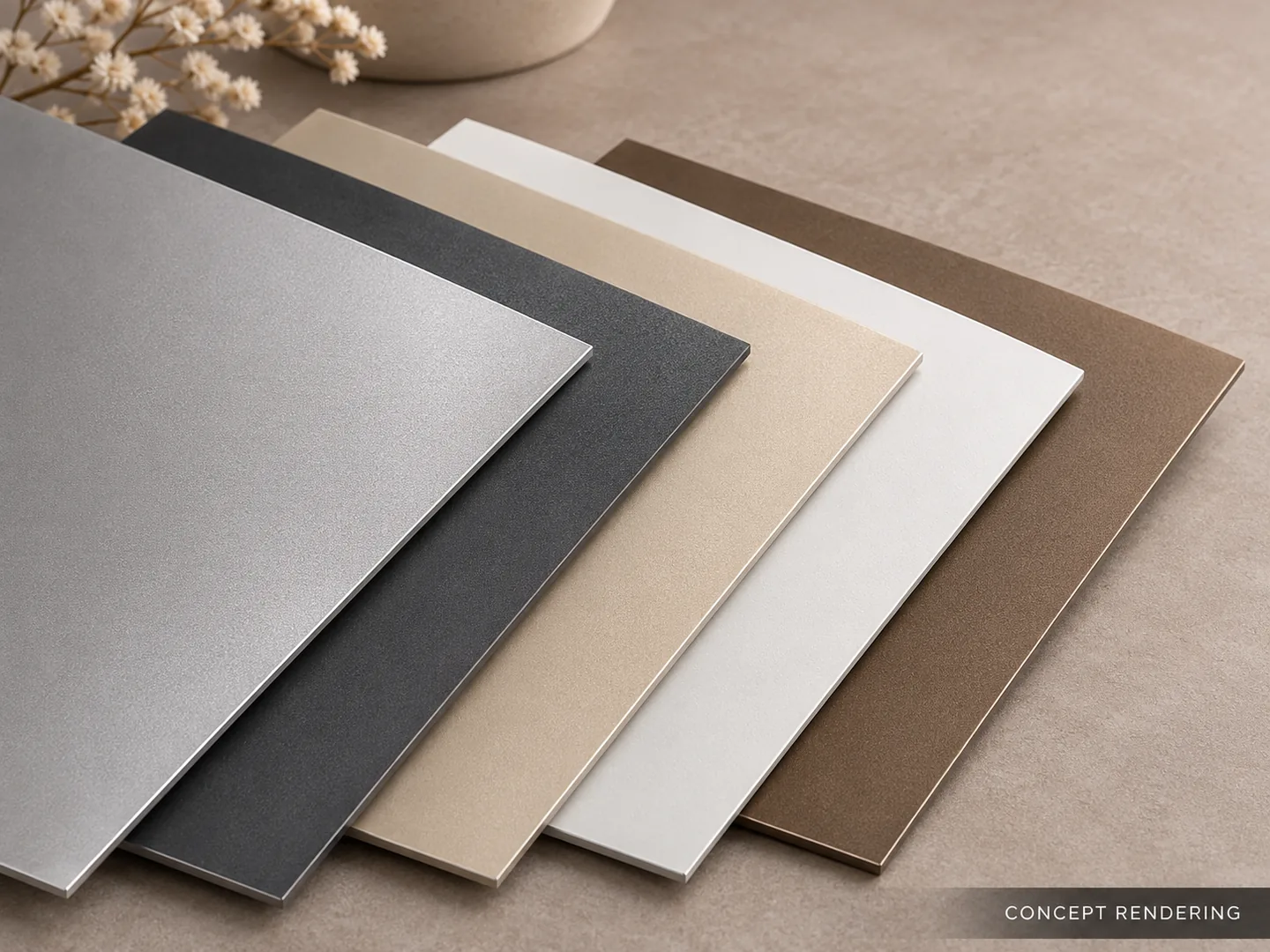
Powder coating commonly offers a wide choice of colours, textures and effects. Textured and matt finishes are popular for gates and fences because they hide small marks.
PVDF is often used for metallic and architectural colours. The system has several layers, and the look depends on that build-up.
For a colour match, send a code or a physical sample. Colours can differ between systems, and metallics can look different from one batch to the next. Approve a sample before production.
Edges, holes and fine patterns
Laser-cut patterns have many edges. Each edge is a place where the coating can be thin.
Powder tends to build up on edges and inside small holes, and it can reduce a tight hole size. A liquid system can be more even on fine detail. The result depends on the pattern, the applicator and the process.
If you have tight fits or very fine patterns, tell the supplier. Ask whether the hole size in your drawing is the size before or after coating.
Where each is commonly used
These are general patterns, not rules.
- Gates, fences, railings, and garden screens. Powder coating is widely used. It gives a durable finish in many colours.
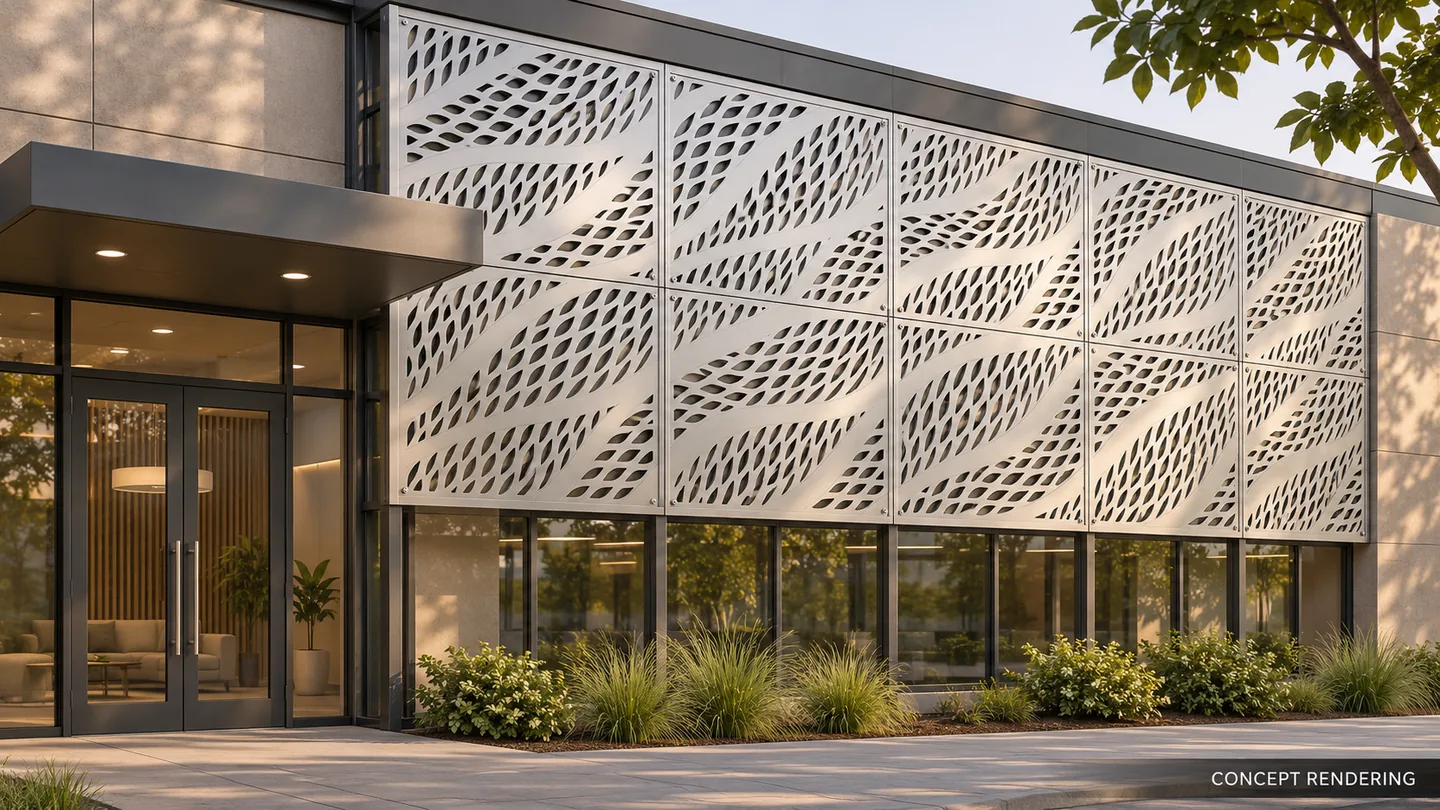
- Facades and large architectural screens. PVDF is often specified, particularly where colour consistency over many years is a project requirement.
- Coastal or heavily polluted sites. Either may be used, but the pre-treatment, coating thickness and cleaning plan become more important.
- Interior panels. Neither may be needed. Anodizing or a simple powder finish may be enough.
If a project has a written specification, follow it. Architects and consultants often name the finish and the standard.
Maintenance
Any finish lasts longer if it is cleaned. Dirt, salt and pollution hold moisture on the surface and speed up wear.
Follow the coating maker’s cleaning guidance. Avoid strong solvents and abrasive pads unless the guidance allows them. A regular wash with mild detergent and water is a common instruction, but check it for your system.
Cost and lead time
PVDF systems generally cost more than standard powder coating, and the process can involve more steps. That is general industry experience, not a fixed ratio. The actual difference depends on the supplier, the colour and the size of the order.
Ask for prices for both finishes on the same panel. Then you can compare the cost against the expected life and the project requirement.
How to choose
Ask these questions in order:
- Where will the panels be installed, and how harsh is the exposure?
- Does the project specification name a finish or a standard?
- How important is colour and gloss retention over many years?
- What colour and texture do you need?
- Is the pattern fine, with small holes and tight fits?
If the answer is a standard outdoor product in a common colour, powder coating is a sound starting point. If the answer is a facade, a demanding site or a written PVDF requirement, quote PVDF.
What to send in your quote request
A clear request lets the supplier quote the right system.
- The drawing file in DXF and a proof with the key dimensions.
- Panel size, thickness and alloy, or the use if you need advice.
- Installation country, and whether the site is coastal, industrial or inland.
- The finish you want, or the specification text if the project has one.
- Colour code or a physical sample, and the gloss level.
- Quantity for the first order.
- Any warranty or test report you need.
Ask the supplier to name the finish system and pre-treatment in the quote.